Treatment for Ocular -Vestibular Issues
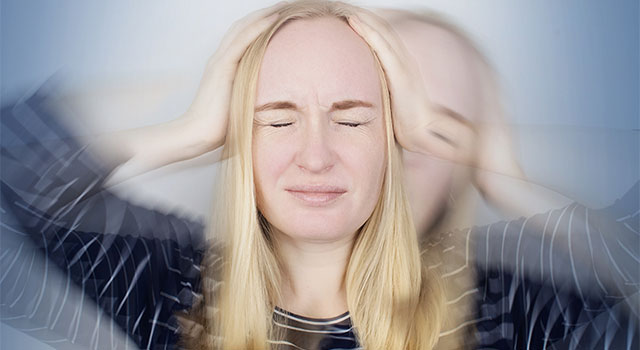
Do you often feel dizzy or experience vertigo, motion intolerance, a persistent sense of imbalance, or unsteadiness?
If so, there’s a chance you may have ocular-vestibular dysfunction. The good news is that these symptoms can be treated and you can regain your quality of life.
Ocular-Vestibular dysfunction is more common than you may realize. A recent epidemiological study estimates that as many as 35% of adults over the age of 40 have experienced some form of vestibular dysfunction in their lives.
Fortunately, most causes of dizziness can be detected through a comprehensive eye exam. It has been found that 85% of cases are due to inner ear disturbance (vestibular dysfunction) and can be treated using Ocular-Vestibular Rehabilitation.
Neuro-rehabilitation therapy allows us to retrain your brain and eyes to regain functionality and quality of life for those suffering from visual problems due to vestibular issues.
Neuro-Optometry works by using a variety of methods and techniques to get both eyes to work as a team and see visual space accurately. This form of therapy, known as neuro-optometric rehabilitation therapy, is an effective treatment for reducing or resolving symptoms associated with ocular-vestibular dysfunction.
If you suffer from dizziness, unsteadiness or motion intolerance, talk to Dr. Shirley Ha at A-Ha Vision. We can help.
What is Ocular-Vestibular Dysfunction?
 The vestibular system is made up of the peripheral vestibular organ (located in the inner ear), the vestibulocochlear nerve, the central vestibular organ and neural connections situated in the brainstem.
When the inner ear sends the brain the wrong information or conflicting signals, the person tends to feel dizzy. As a result, the natural response is to limit movement in order to minimize the rocking or spinning sensation.
Common Symptoms:
- Dizziness and vertigo
- Imbalance and spatial disorientation
- Cognitive and psychological changes
- Hearing changes
- Vision disturbance
Concentration, memory loss and fatigue can often accompany vestibular dysfunction. In order to keep the body upright, the brain needs to work extra hard and therefore compromises on other brain functions.
Some people with ocular-vestibular dysfunction find it difficult to get out of bed, function properly at school and work or perform routine tasks in environments heavy in visual stimuli (think grocery stores, traffic, shopping malls).
How can Neuro-Optometry Help?
Neuro-optometrists specialize in understanding how specific visual dysfunctions relate to a patient’s symptoms and performance.
After reviewing any relevant medical documentation from your neurologist, occupational therapist, physiotherapist, etc, Dr. Shirley Ha will then perform a Neuro-Visual Assessment to identify and correct the underlying cause(s) of the disorder.
We will then craft a personalized treatment plan for your recovery.
During the comprehensive eye exam, the neuro-optometrist will evaluate many functions of the visual system, such as:
- How well the eyes work together
- Whether the eyes are struggling to focus
- Eye scanning and tracking ability
- How the patient processes his/her surroundings and moves through it
- The connection between vision and balance
- Complex visual perceptual ability (how one organizes and interprets visual information and associates meaning and visual memory to it)
- Visual acuity, refraction, eye health evaluation, and peripheral vision testing
Following the examination, the neuro-optometrist will provide the patient with an individualized treatment plan, also known as neuro-optometric rehabilitation therapy. This therapy rehabilitates the visual, perceptual, and motor disorder and is great for patients of all ages.
The rehabilitation program incorporates in-office and at-home exercises for the remediation and management of the patient’s visual problems.
Any Vestibular Dysfunction often requires a multidisciplinary approach. In addition to neuro-optometrists, the rehabilitation team may include neurologists, rehab physicians, nurses, physical and occupational therapists, speech-language pathologists, neuropsychologists, and audiologists.
Our staff is always here to answer any questions you may have. Contact A-Ha Vision to schedule a consultation with our neuro-optometrist.
Our practice serves patients from Oakville, Burlington, Halton, and Mississauga, Ontario and surrounding communities.
References:
- Agrawal Y, Carey JP, Della Santina CC, Schubert MC, Minor LB. Disorders of balance and vestibular function in US adults. Arch Intern Med. 2009;169(10): 938-944.
- Herdman, S. J., & Whitney, S. L. (2007). Interventions for the patient with vestibular hypofunction. In S. J. Herdman (Ed.), Vestibular rehabilitation (3rd ed., pp. 309–337). San Francisco: Davis.